Thursday, April 12, 2012

The Goophered Grapevine

I am not one for ghost stories or farfetched myths that are told to either scare or influence people in a certain way. When reading the story “The Goophered Grapevine” that was the sense that I got from it. When the narrator and his wife go to visit the vineyard in South Carolina in hopes of buying the land for his wives health and also to become part of the grape culture they run into a man on the farm that goes on to tell them a “ghost story” that was supposed to make them not want to purchase the land.
          When the narrator and his wife first arrive at the vineyard they run into a man who seems to be enjoying himself while eating the grapes and “smacking his lips with great gusto” (Chesnutt 34). This was the first indication to me that something shady might be happening. Why was there a man on the vineyard that was supposed to be abandoned and for sale? This man was Julius McAdoo and the belonged to Mars Dugal’ McAdoo. Julius then tells the two prospective buyers that the vineyard is “goophered, -cunju’d, bewitch’.” (35). From this point he has them both hooked as to how it became conjured and uncle Julius goes on to tell them the story of how it became bewitched.
As this story continues that narrator sees that Julius “became more and absorbed in the narrative, hi eyes assumed a dreamy expression, and he seemed to lose sight of his auditors” (35). This to me makes it feel as though Julius is telling a story, one that may be fictional and that he has gone into his own, creative world to continue and live this story. After the story of how the vineyard was goophered and Julius had made his point that they should not buy it, the narrator asks him why he was eating the grapes from the vineyard if they had all died out. At this point throughout the rest of the story it seems as though this story was told by Julius to make them not purchase the land and ruin his business and lifestyle that he was living. It is later stated that “Uncle Julius had occupied a cabin on the place for many years, and derived a respectable revenue from the neglected grapevines.” (43). This shows me that the Julius told this story because he had a vested interest in the vineyard and would be better off if it was purchased so that he could maintain his home in the cabin on the property as well as make some money off of the grapes on the plot of land.
          I do not blame Julius for trying to persuade people of not buying that land that he is living off of and making profits on. But in my opinion the whole story that he told was fabricated and so as not to take away his livelihood. In fact this may have been the land of his master since they both shared the same last name, and there is even indication that the Mars McAdoo may even be his father because the narrator sees that “ he was not entirely black,” (34). This story, much like other ghost or horror stories that are often told, in very unbelievable to me and seems like a ploy to dissuade people from buying the last that contains his life. But I do think that I, the same way that he narrator was able to, would take the story with a grain of salt and be very skeptical of a story that contain goophering and cursing of fruits and would rather say that the reason the vines in the vineyard were ruined by the Yankee con man.  

Inequalities still Exist

Racism and sexism have been issues in the United States since it became a country over two hundred years ago. In Kindred, by Octavia Butler, Dana is alienated by society based on race and gender. These are issues that are still prevalent in our society today.

Society's view of skin color caused Dana to be degraded, especially when she travels to the time of slavery. When Dana is in the 1800`s she is reduced to a slave. She is called not by her name, but is rather referred to as a nigger by her master and even some of the fellow slaves. She fights with Rufus to call her "black." She explains to him "I'm a black woman, Rufe. If you have to call me something other than my name, that's it" (Butler, 25). Alice, one of Dana’s ancestors from the 1800’s, tells Dana that she acts too white.  She says, "You ought to be ashamed of yourself, whining and crying after some poor white trash of a man, black as you are. You always try to act so white. White nigger, turning against your own people" (165). Dana's thoughts and feelings regarding equality for blacks and whites alike have caused her to be scorned by her own race. Racism is not just a thing of the past; it also exists in the present. In Dana’s own time period of the 1970's, she is seen with Kevin by her employer and he makes rude comments  about them. He walks by them and utters, "chocolate and vanilla porn” (56). Dana is an outcast in both worlds due to her race.

Another major issue for Dana is her gender. She is treated differently because she is a woman. She was not even allowed to wear pants when she traveled back to the 1800’s. In the early 1800's all females wore dresses. Mr. Weylin thought she was a man because of the way she dressed and Ms. Weylin gave her the title of "just a strange nigger" (25) because she was not the stereotypical black woman of the time. She did not know how to cook, clean, sew, or raise children like any of the other female slaves on the plantation. She is viewed as crazy because she is a female who is educated like a white man, but she does not know how to perform the "basic routine" of a woman. Dana was not only expected to act like a black woman, but she was also viewed by white males as a sex slave. Female slaves were for the use and gratification of their owners and this meant that they could be raped and that would be acceptable. Dana’s gender was just another reason that she was treated differently. However, gender inequality is not just a thing of the past. According to U.S. Time, “U.S. women still earned only 77 cents on the male dollar in 2008, according to the latest census statistics and that number drops to 68% for African-American women and 58% for Latina women” (Fitzpatrick, 2010). These are significant differences that show that sexism and racism still exist in our country. They are not issues that you have to go back to the 1800’s to find.

           Alienation of race and gender still exist in our own society today. It may not be as obvious because there is not slavery anymore and women have more rights than they did in the 1800’s but it still affects many people. I think that we have come a long way as a society but we are not there yet.

"The Shawl"

There has been much research conducted in accordance with the long-term psychological effects that the Holocaust had on its victims. Nearly 70 years later there are still those people who are suffering from the insecurities and/or childhood memories of the atrocities they witnessed. Not only has the Holocaust affected the victims, but it has been proven that it is transgenerational as well. In an article written by Nathan Kellerman he states, “The offspring of both these groups, the so-called ‘second generation’, gain more awareness of the repressed pain that they indirectly have absorbed from their parents.” In Cynthia Ozick’s “The Shawl” the reader can witness the crippling effect that the horrors witnessed had on the long-term mental state of the character Rosa.

In Ozick’s second story titled “Rosa”, the character is immediately introduced to the reader as, “…a madwoman and a scavenger.”(pg. 13) Ozick uses a strong sense of imagery to portray Rosa as a character that leads a disheveled life as she describes her filthy living space and the “dark hole” of a hotel room in which she resides (pg. 13). Furthermore, Ozick uses metaphorical literary methods to emphasize the state that Rosa’s life is in. Rosa believes herself to be a shell “already fried from the sun.”(pg. 16) When comparing herself to the other residents of Florida she describes them by saying, “They were all scarecrows, blown about under the murdering sunball with empty ribcages.”(pg. 16) Rosa’s perception of herself is again represented by imagery and metaphors as she views herself like “a ragged old bird with worn feathers. Skinny, a stork.” (pg. 23) Such strong, yet dark, language immediately notifies the reader that Rosa clearly has internal struggles that the reader later learns is as a direct result from the loss of her child in a concentration camp.

Elie Wiesel, author of the holocaust novel titled “Night”, accurate states that “time does not heal all wounds; there are those that remain open.” This proves to be the case for Rosa as she refuses to accept the death of her daughter that took place decades before hand, still writing her letters and speaking to her as if she were actually going to read them. She continuously imagines how her daughter would be at this stage in her life, married, a doctor. Rosa’s psychological instability is also represented by the extreme actions she took when destroying her own business in New York. Ozick makes it a point to relate this incident with the mental effects that Rosa’s character is still suffering from her traumatic experiences of her past. The psychological implications of the Holocaust on Rosa are evidently still very strong even decades after the incident.

When I first read “The Shawl” I liked it because of the author’s ability to use imagery and metaphors to really draw the reader into the details of Rosa’s life. For me, it was easy to become involved with this character as a reader because the emotions going on with Rosa are so vividly presented. But as I reflected on what I had read it had a greater impact on me that meant more than just the process of reading the story. I began to really think about Rosa’s situation, and then understand the hundreds of thousands of other people who were similarly affected by the Holocaust, and are still suffering long after. It made me think further about the psychological effects that such an atrocity carries through generations of a family. For example, the children of the Holocaust who lost their parents before they really even had a chance to know them, perhaps clinging on to vague memories they had while they were still alive. The grandchildren that don’t have an extended family because all of their ancestors were wiped out by violence and hatred. I contemplated the insecurities that could result for an entire family and the lack of trust that they may pass on to their own children. At what point do these toxic psychological effects start to disappear? How many generations of a family that suffered from the Holocaust does it take to recover from unimaginable circumstances? “The Shawl”, to me, brings this awareness to the reader, and made me realize that the Holocaust is not so far back in the past as I used to think it was.

The Future of Racism

Recently I read an opinion article posted in the New York Times that touches on the issue of racism and the place it may hold in the future of our society. I found it interesting to read this article a little more closely, as we have touched a lot on the matter of racism throughout the course. While, as a class, we have reflected on America’s history with racism, the opinions of this author represent a different twist on the issue, predicting the ways in which it might affect our society in the future.

Ross Douthat begins by questioning whether or not there is an “over-optimism” about the role that racism will play in our society. He mentions that if racism is just “an ideological and political problem that’s specific to a particular time and place” then as the old white generation dies out, racism in our country will continue to decrease. Many people, myself included, have thought of racism as an outdated flaw of our country. While it is still present, we like to think that it is constantly decreasing as the younger generations grow, and those who were immersed in a racial dominated society begin to pass away. I believe that something can be said for this, as the acceptance of a society where the institution of slavery was thought to be “normal” drastically changed when the slaveholder generation died off. Time heals some wounds, but not all.

Douthat counters the argument that racism is a thing of our past by stating, “I can think of a dozen reasons why public expressions of race-based hostility might become more common, not less, as the America of the Boomers gives way to the America of the millenials.” Douthat includes the internet’s ability to make the taboo a little less taboo, and our growing distance across time from the horrifying social injustices based on racism that took place in our country’s past, as significant reasons that we may experience a growth in racism. It makes sense. The “shock factor” of many things that may have seemed unthinkable to speak of in the past has now decreased due to the internet and media. A large number of people have become numb to extreme behavior, due to their consistent exposure to it. This makes people less likely to act out against a racist comment they may see posted on social networking sites, perhaps even passing over it as if they never saw it. Furthermore, the generations that are moving into adulthood never experienced the civil rights movement. Sure they read about it in history books, and they all know who Martin Luther King Jr. is, but they were not present to experience the drastic social changes that took place during this time. This makes our society vulnerable to an increase in racism if lessons learned are not passed on from generation to generation. Surely there will never be the institution of slavery, or the appalling Jim Crow laws that blatantly segregated races from one another, because politically these lessons learned from our past have been set in stone.

http://douthat.blogs.nytimes.com/2012/04/10/the-future-of-racism/

Wednesday, April 11, 2012

Kindred

In the book Kindred by Octavia Butler, Dana and Kevin enter the 1800’s, a world vastly different than the one that they were currently living in, and the thought of accepting slavery and making it a lifestyle would have frightened them. They were disgusted at the behavior that occurred on the Weylin farm was barbaric. Slavery was something that they had never been a part of and had been eradicated by the time that they had been born and living their lives out in California in the 1970’s. But when they were continually thrown into this brutal situation, they acclimated and became part of the slavery culture, despite their opposition to the institution.
            When Dana first is taken back to the 1800’s she does not quite feel the effects of slavery and the inhumane treatment of African-Americans. Dana is able to save Rufus from drowning in the river near his house. When she gets him safely to land she is immediately beaten by Rufus’ mother and is almost shot by Tom Weylin and she cannot understand why this is happening. She immediately returns back home in California at this point and cannot understand why she would be shot for saving the boy’s life. It is not until the second time that she returns when she figures out from Rufus that she had returned to the year 1815 and in living on a slave plantation. During Dana’s second visit Rufus, now 8 or 9 years old, calls her a “nigger” and she figures out what is going on with her time travel. When she goes to visit Alice and her mother she is introduced to slavery much the same way that Frederick Douglass is shown slavery when his aunt was whipped.  Dana sees a whipping of a slave by patrol men and learns the brutality that occurs during this time.
            But I think that the third time that Dana returns to save Rufus with Kevin is the time that they really become to acclimate and accept the ways of slavery. Dana and Kevin first accept that they should not tell people that they are married but rather that Dana is Kevin’s slave. This is one of the first moments when they begin to be shaped by slavery and change to fit into their situation (Butler 60). On this trip together Dana begins to notice that the time that they have spent on the Weylin farm has changed them. She thought that her and Kevin’s time was disturbing when she realized “How easily we seemed to acclimate.” (97). With their ease of life and ability survive dependent on their acceptance of the lifestyle; Dana and Kevin were able to change themselves. But as Dana continues to return to the farm, she has less trouble learning the life of slavery that is being lived on the farm and she is able to find her place as a “slave”. As the novel goes on and she spends more time on each visit on the ranch, she is more acclimated and used to the life. At one point she asks herself “When had I stopped acting? Why had I stopped?” (221) At this point she is now a part of this life and does not have to act like she once did but rather it has become her natural instincts to live this way.  
            I think that the acclimation that they go through in the 1800’s takes its toll and full effect when they return home. Both Dana and Kevin have a difficult time returning to their previous lifestyles. The changes that they have to go through, especially Kevin, who had been gone for 5 years, were hard on them. I think that the acclimation process that they both had to go through, both on the Weylin farm and at home changed them as people. The changes that they made when they returned back in time to adjust to slavery and stay alive, but in my opinion I think that this changes that were made grew on them and they were actually apart of the institution of slavery and had acclimated quite easily, much the same that slaves, their owners, and children did during these times.  

"The Woman Warrior"

While Maxine Kong Kingston’s story of “The Woman Warrior” descriptively informs the reader of the way life used to be in China, it is also attempting to provide the reader with an understanding of a much more complicated situation, familiar to many immigrants. Through telling the story of her disgraced and deceased aunt, the narrator provides insight to the struggle of a balance that emigrants must endure in their new home. This struggle is one of maintaining old traditions, while still trying to adapt to new ones in a new country.

Living in China in a time where women were meant to be plain, no nonsense, and sex was never spoken of; the narrator’s aunt becomes pregnant by someone that is obviously not her husband. Because her husband had been gone for years, the villagers began to notice her protruding belly. Because of this illegitimate pregnancy, the villagers attacked her home and livestock, bringing disgrace upon the family, and making an outcast out of the narrator’s aunt. This disgrace is something that the narrator’s father clearly still carries with him. “Don’t let your father know that I told you. He denies her.” (Pg. 5) The narrator’s mother clearly expresses the shame that her aunt brought upon the family, in an effort to prevent her own daughter from making the same “mistake”. It was “…a story to grow up on” for the narrator, and one she was meant to never repeat, even in a new land (Pg. 5).

After telling the situation of her aunt, the narrator then ties in the struggles that past and present can have on an immigrant. The narrator states, “Those of us in the first American generations have had to figure out how the invisible world the emigrants built around our childhoods fits in solid America.” (Pg. 5) How, trying to comply with the traditions of their parents, yet fit in with the surrounding society, does a first generation American create the perfect balance, be it a moral one or a cultural one? According to the narrator it takes a sense of understanding what exactly is Chinese to begin with, yet she finds difficulty in distinguishing between “…what is Chinese tradition and what is the movies?’ (Pg. 6)

The narrator then explores possible reasons for her aunt’s pregnancy in China, by suggesting such causes as rape, incest or lust. “Women in China did not choose. Some man had commanded her to lie with him and be his secret evil.” (Pg. 6) Here the narrator is suggesting that it was a pregnancy caused by rape and one that she did not desire. The narrator suggests lust as a factor by stating, “…a wild woman, kept rollicking company.” She quickly rejects this idea though, as she couldn’t imagine a Chinese woman of such nature. “He may have been somebody in her own household,” suggests that incest had occurred. Through examining and contemplating the nature of her aunt’s pregnancy, the narrator seems to mention all causes that are present among American society as well. Sure, a woman’s home will not be attacked by an entire village if she conceives a child out of wedlock, but women in American society often do have to pay a price for this as well. Judgments, financial tribulations, and the lack of support for these women in our own society present the same sort of idea as in “The Woman Warrior”. It is the woman’s fault, it is the woman who must suffer, and this is the parallel that the narrator can draw between her ancestry and her present culture.

Power and its influence


            Octavia E. Butler’s novel Kindred, introduces a story that is slightly different from the other texts we have been reading during this course. This interestingly this novel deals with the topic of time travel. Dana, a young African American woman is celebrating her twenty-sixth birthday with her husband Kevin, when she mysteriously gets transported to another time period. When she wakes up she is in the south and hears the screams of a young boy drowning. This young boy is Rufus, the son of Tom Weylin, a plantation owner.
After realizing that she may be transported to this time period again, Dana makes it her goal to try to educate and prevent Rufus from becoming the cruel slave owner his father is. After hearing Rufus call her a nigger Dana states, “His air of questioning confused me. Either he really didn’t know what he was saying, or he had a career waiting in Hollywood. Whichever it was he wasn’t going to go on saying it to me” (25). This is her first attempt at educating Rufus, but as we continue to see later her attempts are challenged because of the horrible environment he is being exposed to. Everything that he knows he has obtained from his parents or from observations around him. Although Rufus’s young instinctive moral sense gives Dana hope that he might not grow up to be like his father, his good instincts prove to be no match for the power he is later given.
When we first are introduced to Rufus he is a young boy, and despite being constantly bombarded with the ideas that the color of his skin gives him the authority and superiority over African American people, he shows Dana that he is still humane and compassionate by trying to protect her from his parents. This can be seen in one moment in the text when Dana is reading to Rufus and Margaret continuously attempts to interrupt and get Dana to leave. To Margaret’s surprise Rufus responds, “‘don’t say nothing!’ Rufus took his head off her lap. ‘Go away and stop bothering me!’” (103). Rufus choosing Dana over his mother shows the type of bond that they have established. He seems to demonstrate more respect towards Dana in situations like this.  However, his actions also show how much his father’s behavior has begun to influence him. Dana describes her observations,
Rufus turned his head and looked at her. The expression on his face startled me. For once, the small boy looked like a smaller replica of his father. His mouth was drawn into a thin straight line and his were coldly hostile. He spoke quietly now as Weyling sometimes did when he was angry. ‘You’re making me sick, Mama. Get away from me!’ (104).
Rufus is slowly transforming into his father and this is one of the moments when Dana begins to recognize this. He has disrespected his mother because he has seen his father do the same multiple times. Therefore he has already been conditioned to think that this type of behavior along with the way slaves are treated is acceptable. This moment is significant because it shows that despite Dana’s efforts to educate him, this seems to foreshadow what Rufus’ behavior will be as an adult.  Rufus can’t help but act this way because it is the only way that he has been taught to act towards other individuals.
             
                Upon Dana’s fourth transport to the south, she returns to a completely different Rufus. The young boy she last saw is has now grown into an adult. She quickly finds out that he is a changed person. Upon returning she arrives to the scene of a fight, between Rufus and Alice’s husband Issac. Dana finds out that this fight is occurring because Rufus raped Alice. Once again we see the effects of his father’s behavior. Rufus has used his superiority and power to try to get something that he wanted even if it means he has to use violence to get it. Dana is shocked by this revelation. She states “I gazed down at him bitterly. Kevin had been right. I’d been foolish to hope to influence him” (123). It is during this moment when Dana realizes that her previous efforts to alter this child’s future were futile. I don’t think Dana was foolish to try to change the type of person Rufus could turn to. However, it was definitely going to be a hard task considering that Rufus is surrounded by this negative behavior. He can’t help but act based on what he has seen and been taught by his father.
            As an adult, Rufus succumbs to the corrupting influence of the authority that is given to him. He is now able to use what Dana wants; freedom, and Kevin, against her. Knowing that Dana is desperate to be reunited with Kevin, he fools her and does not send the letters she has written to her husband. Unbeknownst to her, she patiently tries to wait for his return and willingly does as she is told. Once Kevin comes back to rescue Dana, Rufus is determined to get not let her leave the plantation. As Dana attempt’s to escape, Rufus declares, “‘you’re not leaving!’ he shouted. He sort of crouched around the gun, clearly on the verge of firing. ‘Damn you, you’re not leaving me!’” (187).   Once again he is using his power and the threat of violence to try to get what he wants. It seems like he has grown attached to Dana and fears her abandonment. However, just like Alice I feel like Rufus is always trying to obtain what he can’t have. He knows that Dana is not supposed to be in his time period but he is reluctant and selfish to try to keep her there. He not only tries to manipulate her life but also the lives of everyone on the plantation. Like a true plantation owner he manages to do this through the only way he knows, corruption, manipulation, the use of fear and violence.  
             It is interesting to see how power can change someone for the worst. However, I feel like you can’t blame Rufus for the future he was destined to have. Dana tried to change this but the influence of his father was far too strong. One thing that I was left wondering was if Dana would have spent more time on the plantation to teach Rufus while he was becoming an adult if that could have made a difference? Dana tried to change him as a child but while she was back in her time Rufus was becoming an adult and wasn’t there during that time to continue her teachings. So it would have just been interesting to see if that would have made a difference in any way.

Wednesday, April 4, 2012

What was the cause of the narrator’s manic behavior?

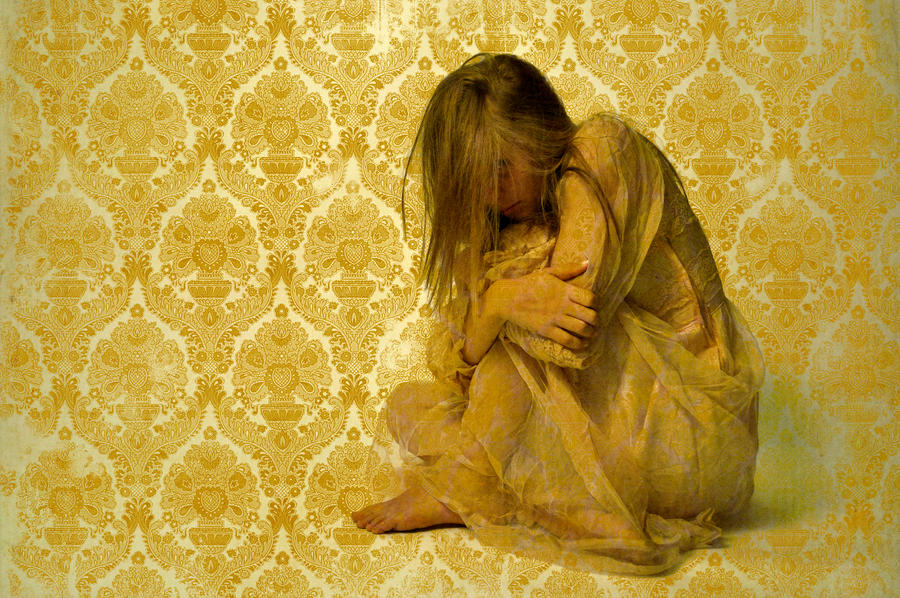
In Charlotte Perkins Gilman’s, “The Yellow Wallpaper” we are submerged into the first person journal of a woman that is being confined in a room by her doctor husband, John. During our discussion of this short story questions were brought up regarding the narrator’s state of mind.  Is she really suffering from a psychological disorder, or is her behavior result of her trying to lash out against her husband’s over controlling ways. Although, there are passages in the story that could support both argument’s I believe that the narrator was suffering from a physiological disorder; specifically Postpartum depression.
            Postpartum depression is a type of depression that affects some women after they have given birth. Postpartum depression can range from moderate to severe and symptoms can occur anytime after the delivery or even a year later. Symptoms include agitation, irritability, anxiety, changes in appetite, feeling withdrawn or unconnected, thoughts of death or suicide, trouble sleeping, etc. Mother’s who are diagnosed with Postpartum may also be unable to care for the baby or have negative feelings towards the baby. If diagnosed with Postpartum it is suggested that the mother not be exposed to major life changes after giving birth, that they rest as much as they can, and that they be surrounded with friends or their partner. After looking more deeply into what postpartum depression is and some of the symptoms that come along with it, I started to draw connections with the narrator.
            Right away the narrator brings establishes the setting and reveals that she is being confined to a room in summer home by her physician husband. She also discloses that this confinement is a result of her husband diagnosing her with a “temporary nervous depression” (1). This is the first sign that shows the reader that something is not quite right with the narrator.  One could easily argue that this could be any type of psychological depression however she later reveals a significant detail regarding her current situation. The narrator states, “It is fortunate Mary is so good with the baby. Such a dear baby! And yet I cannot be with him, it makes me so nervous” (4). The narrator has recently given birth and as she states it is obvious that the baby is not under her care. Women who have postpartum depression usually feel high levels of anxiety when separated from their newborns.  In many cases separating the newborn from their mother can intensify and worsen a mother’s symptoms. The fact that the narrator is separated from her child could explain why her manic behavior intensifies throughout the story.
            During this time period there was no official title or established research for postpartum depression. Therefore it would explain why the narrator and her husband are not entirely sure of what is occurring to her. Women or even men who experienced psychological episodes would in many cases immediately be deemed insane and shipped away to a psychiatric hospital.  We can see this already happening in the story as the narrator talks about the way her husband wants to renovate the room she is in. She states, “He said that after the wallpaper was changed it would be the heavy bedstead, and then the barred windows, and then that gate at the head of the stairs and so on” (4). Her room already resembles a psychiatric room, which reaffirms the idea that her husband thought she was going crazy. However, seeing that there was no official connection between child birth and depression he obviously was not aware of the true diagnosis of her condition.
            It has been suggested that in some cases of postpartum depression that women be surrounded by their loved ones and watched closely. In this story the opposite is being done, the narrator is being completely segregated from seeing anyone for long periods of time. Referring to a conversation with her husband she states, “‘I don’t weigh a bit more,’ said I , ‘ nor as much; and my appetite may be better in the evening when you are here, but it is worse in the morning when you are away!’” (9). Here the narrator identifies that she does not like being alone. It’s almost a cry for help to her husband. She wants to have someone around and even points out that then he is not around that her symptoms are much worse when he is not around. She even points out that she has no appetite; this is another symptom that women with postpartum experience. However, unaware of what she is truly feeling her husband is only making her situation worse.
            Another indicator that she is suffering from postpartum is the narrator considering suicide. As the story is almost coming to an end she states “I am getting angry enough to do something desperate. To jump out of the window would be an admirable exercise, but the bars are too strong even to try” (14). As previously stated women with postpartum sometimes have thoughts of suicide but in many cases don’t actually go through with it. Here in the narrators manic moment the she seems absolutely fed up with everything she has been experiencing and for a moment thinks’ about jumping out the window to end her life.  However, she does not go through with it because she fears it would be “improper and might be misconstrued” (14).  The final breakdown she experiences with the wall paper can be seen as her depression worsening and a final cry for help. Terrified by her behavior her husaband faints in horror and one is only left wondering what the fate of our narrator is.

Sources I used on PPD:
http://www.webmd.com/depression/postpartum-depression/postpartum-depression-topic-overview

Sunday, March 25, 2012

Preview of Cargo: Innocence Lost


I have provided a trailer to the Documentary Cargo: Innocence Lost and a clip from the documentary that show's the way these young girl's are  manipulated and lured into this industry. For anyone interested in knowing more about this film  I encourage you to visit the film's website http://www.cargoinnocencelost.com/home.html for more information. 

Modern day slavery: Sex Trafficking


Recently, I had the opportunity to view the screening of the documentary Cargo: Innocence Lost on our school campus. The documentary directed by Michael Cory Davis documents the horrifying world of sex trafficking through first hand interviews with victims and victims’ advocates. Sex trafficking is the illegal trade of human’s for the mere purpose of forced sexual labor and exploitation. Basically it is like a modern- day form of slavery. You would think that after seeing the previous history of slavery that something like this would not be occurring but unfortunately it is and it is an industry that keeps growing by the day. This documentary absolutely opened my eyes to the severity of human trafficking. Prior to viewing the film I had some background knowledge of this atrocious industry but wasn’t aware of how much of this was going on in the United States, the extent of the manipulation used and the abundance of money that is exchanged for innocent humans. Although, the film stated that a large number of victims come from East Asia, and Europe, there is a high demand for American women, specifically blonde hair and blue eyed women. As a result of this demand there has been an increase of sex trafficking activity in the U.S. Cities like Los, Angeles, San Francisco, and New York City are amongst the cities that have had the largest involvement in this industry.  This was shocking to me because one would like to think that something like this isn’t happening in their country but unfortunately this has been a big misconception.
This lucrative industry has one of the fastest growing criminal industries in the world and next to drug trafficking it is the second most profitable illegal industry in the world.  It was shocking to see the various ways that women usually between the ages 12-18 are lured and trapped into this industry. Sex trafficking victims in many cases are approached at malls, stores, parks etc by men or even women promoting some type of modeling agency or acting agency. They tell these young women that they would be great models or actresses and give them a location for them to meet if they are interested. Unfortunately, these young girls are unaware of these individual’s true intentions and are taken from their families to be forced into slavery. In other cases some women from foreign countries are approached by individuals offering them a better life, promising them a chance to live the “American Dream” but once they arrive to their destinations they learn that these promises will not be fulfilled.
 Priscilla, one of the young women interviewed was promised this lavish life just to discover she had been fooled. Coming from a broken home with a brother who sexually abused her when she was younger, Priscilla was looking for an opportunity to escape her home situation. Therefore when approached by a 45 year old man promising her an opportunity to go to America for a better life she saw this as an opportunity to escape and better her life. However, upon arriving to the U.S she was taken to this man’s home. Her captor instructed her to remove her clothes and raped her multiple time; this is the moment that Priscilla describes when she realized everything that she was told was a lie. She was not allowed to leave the confines of her captors home, couldn’t answer the phone, no one was to know she was living there. She had to have sex with her captor whenever he desired and have sex with his friends is he suggested it.  Her testimony was absolutely heartbreaking, you could tell that this was a difficult thing to describe and recollect. It was shocking to hearing the way she was manipulated to prevent her from escaping her captor’s home. She was told that if she tried to escape or call the police she and her family would be killed. Since Priscilla had run away from her home to leave with her captor none of her family members were aware of her whereabouts. Therefore he swore he would make her disappear from the face of the earth if she dared escape. However, the use of “affection” and false love is also used to manipulate girls like Priscilla.  
It disturbing to see the re-enactments of these victims being sexually abused. It’s one thing to hear about it but another different thing to see it occur. These victims were forced to sleep with multiple men, sometimes even up to 50 men in one day at any time of the day. The women were confined in a small room that contained only a bed where they would wait for their customers. The customers in many instances would be violent with these women and would in many cases choose to not use protection during intercourse. This resulted in the spread of sexually transmitted diseases. It was hard to see how these women were stripped of their identities and dehumanized. It very much reminded me the Narrative of the life of Frederick Douglass, An American Slave because they were immediately stripped of their identity upon becoming slaves. Frederick described how they were taken away from any family members, not given any information about their lives and forced to do what they were told.  These women were also obviously taken from their family members, stripped of their identities by changing their names and referring to them as objects, and were forced to do whatever they were told or suffer the gruesome consequences. During the documentary they revealed the structure of how they broke down these women. First they removed them from any type of structure that they were used to this included moving them to various locations so they wouldn’t form support systems with the other women. They would then break down their will, and would confine them in vile living situations for long periods of time.
The women who are fortunate enough to escape this industry face an even more difficult road ahead of them. They have to face trying to establish their lives again while trying to gain a sense of normalcy. This is a difficult task because these women have been so brainwashed that they are unable to make decision on their own. A simple task like choosing what they are going to eat for the day is a challenge for these victims because their whole lives had been manipulated before. These women are haunted by the idea that these men will find them once again and kill them.  Year of psychiatric help are sometimes necessary for these women so they can try to be normal members of society. This film was definitely eye opening to a serious issue that our world is facing and I would urge everyone to watch the film if they can to become more aware of this problem. I think everyone should be informed of the atrocities that are occurring to try to prevent any more individuals being abducted or forced into this industry.

Thursday, March 8, 2012

Slaves and Slaveholders are Dehumanized

Slaves and Slaveholders are Dehumanized

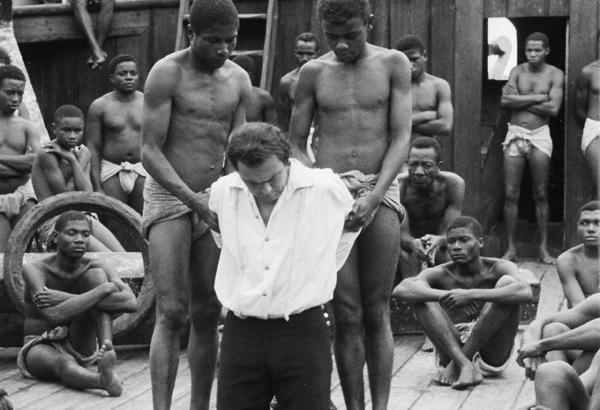
                Slavery makes one man the property of another man. Frederick Douglass wrote an autobiography, The Narrative of the Life of Frederick Douglass, and at the time many people believed that slavery was completely natural. It was acceptable to chain a man and force him to do intense labor all day. However, the consequences of slavery were not just bad for the slaves, but were also bad for the slave owners. Slavery was dehumanizing for everyone involved.
                The reasons that slavery is dehumanizing for the slaves are clear. They are stripped of basic rights and many slaves do not know their age or even their parents. Douglass states, “By far the largest part of the slaves know as little of their ages as horses know of theirs, and it is the wish of most masters within my knowledge to keep their slaves thus ignorant” (Douglass,  47). Slaves are also beaten, raped and treated in ways that humans should never be treated. They are conditioned to believe that they are supposed to be slaves and many slaves do not even hate their masters. Douglass recalls, “I have been frequently asked , when a slave, if I had a kind master, and do not remember ever to have given a negative answer; nor did I, in pursuing this course, consider myself as uttering what was absolutely false” (62). This shows that slaves are dehumanized because they accept their condition as property and in some cases they are even loyal to their masters.
There is reason to believe that slave owners are even more dehumanized than their slaves. This is because they are the ones in control. Slaves do not have a choice whether they are to become a slave or not so they cannot be blamed. A slave owner chooses to own slaves and chooses to treat them poorly. Slavery causes slave owners to become cruel and do things that a normal person would not even think about doing. Douglass states, “Mr. Severe was rightly named: he was a cruel man. I have seen him whip a woman. Causing the blood to run half an hour at the time… he seemed to take pleasure in manifesting his fiendish barbarity” (55). This is an example of how a slave owner is dehumanized because he has no compassion or sympathy for beating another person. Some slave owners raped their slaves and those slaves gave birth to their children. Douglass talks about this and says “The master is frequently compelled to sell this class of his slaves, out of deference to the feelings of his white wife; and, cruel as the deed may strike any one to be, for a man to sell his own children to human flesh-ongers, it is often the dictate of humanity for him to do so” (49). The slave owner commits several acts of inhumanity by raping and then selling his own children with the knowledge that they will suffer.
Slavery is unnatural. It causes the owner and the slave to act in ways that humans do not normally act. I find it disturbing that it was once considered normal and it was a common occurance in our country.

Wednesday, February 22, 2012

Perfection

               Why do we as human strive for perfection? Is it our natural instincts to try to become perfect and do things perfect? Or can we not takes things how they are and live with them as good enough. In Nathaniel Hawthorne’s The Birthmark, he takes this question and poses it to a man who has it almost perfect and pushes the limits of science, love, and perfection.
               Hawthorne’s main character in the story, Aylmer has it all. He is lucky enough to do what he loves to do, which is experiment in his laboratory as an alchemist, and is married to a beautiful woman. His wife, Georgiana, was envied by both men and women who had the opportunity to meet her. She had one problem though. She had a birthmark on the side of her face which “bore not a little similarity to the human hand, though of the smallest pygmy size.” (Hawthorne 85). Despite the envy that his wife draws from others and how beautiful she is, Aylmer cannot get past the fact that she has that birthmark on her face. It truly bugged him and “he found this one defect grow more and more intolerable with every moment of their lives” (86). He then resolves with Georgiana that he is to remove the mark from her face.  Aylmer is striving for perfection in this aspect of his life but also with his work as he is working with new science. He wants this and “possessed this degree of faith in man’s ultimate control over Nature.” (84). In his attempt to remove the mark from his wife’s face, Georgiana dies. This goes to show that perfection may be something that as a human race we may not be able to accomplish.
               The more that people try to become perfect, the more that they can become flawed. I would much rather be married to an almost perfect wife with a tiny hand shaped birthmark on her face than a perfect wife without a birthmark for a minute who dies afterwards. That is the greediness of human nature. We cannot accept what we have and we always want more. People are so often criticized for one flaw that they might have rather than the many unique abilities and characteristics that they have. One example that I can look at is girls who get extensive plastic surgery done to themselves. They do this to change their looks and appearance to others and possibly for themselves. That surgery may make a person feel better about how they look at themselves but what it can’t do is change your qualities as a person. Georgiana was the same person with or without that birthmark on her face because it did not change her personality or the way that she felt about Aylmer. In this case I think that Aylmer acted very selfishly in trying to fix what he say as a defect in his wife, a person that he married despite the fact that she had the mark on her face. Aylmer, as well as a lot of human being should be thankful for what they have and what they are given in life because there are a lot of people who may envy and want what you have much like Georgiana.
               I think that it is human nature to want the best and to want more. If you are the second wealthiest person in the world, you may want to be the richest or if you have envy as a pretty woman you might want to become even prettier because you feel that you yourself aren’t good enough. I think that we take for granted what we have because there are a lot of people who don’t have the money or beauty that another does and would be so grateful for just a chance to achieve that stature. Because much like the outcome that Aylmer experienced by killing his wife, the pursuit of perfection may be thought of as worth it but the end result may change you forever, leaving you a completely different person.


Slavery’s Effects on Blacks and Whites

The inequality that is created by the institution of slavery can not only be degrading to those people who are enslaved in such a cruel and unjust system, but it can also have a negative affect on the people who enslave others. In Frederick Douglass’ book, Narrative of the Life of Frederick Douglass, an American Slave, he is able to display the degrading affect of slavery not only on the slaves but also on the enslavers. Douglass as well as his owners feel these affects through out the narrative of his life as a slave who achieves his freedom from slave to man.

            Through out Frederick Douglass’ childhood, there are a lot of instances where he is subject to terrible abuse and degrading behavior against him. As a youth he learned his first lesson about slavery when he sees the severe whipping that his Aunt Hester receives from their overseer Mr. Plummer. Douglass’ “entrance into the hell of slavery” was marked by this “horrible exhibition” that took place in front of his own eyes and the bloody spectacle that took place had a profound effect upon him (Douglass 51). This was the start of what was to come through out the beginning of his life. As he continues his journey as a slave he has more gruesome experiences that are intended to breakdown the slaves both mentally and physically.

            One main example that Frederick Douglass used to show the dehumanization and the negative effects of slavery on people were with Mrs. Sophia Auld and her change in attitude towards Douglass before and after her inception into the world of slavery. When Douglass first is sent to Baltimore to work for the family of Hugh and Sophia Auld, he is wildly excited and impressed at how well they both treated him. Neither of them had ever owned any slaves and treated him much better than he ever had before. He found that Sophia was so nice that she began to teach him the alphabet and was teaching him how to read. Douglass described Sophia as “a woman of the kindest heart and finest feelings.” (77). This came quickly to an end when her husband demanded that she stop teaching the slave to read. From this moment on Sophia was transformed into a different woman than she was before she became a slave owner. Her demeanor changes and she becomes much crueler to Frederick than she had been previously. After this he would describe her in a whole different light, “That cheerful eye, under the influence of slavery, soon became red with rage; that voice, made all of sweet accord, changed to one of harsh and horrid discord; and that angelic face gave place to that of a demon.” (78). I think that this can be largely attributed to the effects that slavery had on her as a person who is to rule over another human being. Enslavement caused her to change and in some ways dehumanized her and made her less kind and sympathetic as a human.

            Another person who experienced the effects that slavery had upon the enslavers was Mr. Gore. Mr. Gore was the new overseer for Colonel Lloyd as the previous one “lacked the necessary severity” (65). Mr. Gore on the other hand did suit Lloyd’s preference as an overseer. He was a “grave man” who ruled over the slaves with a firm hand and whip. I think that one thing that shows that Mr. Gore was a cruel and inhumane overseer was when he shot Demby in the lake (66). Gore, as a cold hearted person, was unaffected by the result of his shooting of Demby as Douglass said that “A thrill of horror flashed through very soul upon the plantation, excepting Mr. Gore.” (67). With the task of degrading and controlling other humans as a slave overseer, Mr. Gore became unaffected by the mere fact that he killed a man and I think that his job dehumanized him.  

            Slavery was an institution that degraded the slaves and put them into a position of submission to the white slave owners. This broke down the slaves both physically and mentally. But it also broke down people who were doing the enslaving. Sophia Auld was a sweet and kind woman previous to her acquiring a slave and having power over him and Mr. Gore as a brutal slave overseer became immune to such terrible behavior that he was committing. Slavery ruined not only blacks, but white slave owners as well.


Benito Cereno

During our in class discussions of Herman Melville’s “Benito Cereno” there were several interesting points that were brought up regarding the story. Two things that at were brought up in discussion that I found interesting   was regarding Captain Delano and his inability to “read” what was occurring on the San Dominick and whether Babo should be considered the villain of this story. There were several instances in the novel where Benito Cereno and his crew exhibited strange behavior. Delano witnessed such behavior but would dismiss it without questioning it any further. Amongst the various instances one that I thought was interesting occurred when Delano had first boarded the San Dominick. Delano witnesses:
“Three black boys, with two Spanish boys, were sitting together on the hatches, scraping a rude wooden platter, in which some scanty mess had recently been cooked. Suddenly, one of the black boys enraged at a word dropped by one of his white companions, seized the knife, and though called to forbear by one of the oakum- pickers, struck the lad over the head, inflicting a gash from which blood flowed” (Melville 179).
Delano is shocked and questions what he has just witnessed between the black boy and Spanish boy however upon Cereno’s nonchalant response he doesn’t press the situation any further. When I initially read this passage I thought it was interesting because during that era any slave attacking someone that is not of color would be considered a great offense and punished, therefore when Cereno didn’t respond to this or implement any type of punishment for what had occurred to the Spanish boy it seemed very odd. Even Delano states that “had such a thing happened on board the Bachelor’s Delight, instant punishment would have followed” (Melville179), therefore he knew that this behavior was not acceptable but doesn’t choose to regulate the situation himself.  The fact that Delano didn’t press this issue any longer led me to wonder whether he didn’t interfere because this was not his ship and crew? Or did he just not care about what he had seen?  The fact that he accepts Delano’s response as purely a “sport” makes me characterize Delano as naïve because this incident clearly indicates that something is not quite right on the ship.
            After various suspicious incidents occur on board, the truth behind Cereno and his crew’s strange behavior is revealed. To Delano’s surprise the ship has been in control of Babo and the slave’s all along. During class the question of whether Babo should be considered the Hero or Villain of the story was brought up. It was definitely an interesting suggestion because I was not thinking about that while I was reading the story. Once I began to think about it I came to the conclusion that I think Babo should be considered the Hero because although he did manage to take over this ship and had the captain of the ship killed we also have to take into consideration what these slaves were going through. Slaves were abused, tortured, overworked and killed by their masters in the same cruel way that Babo and his treated the crew of the San Dominick. These slaves were trying to find a way out from this forced life so as you can see in the novel that would have not been possible unless they gained control and killed the captain in front of their crew as a way of scaring everyone else from trying to fight back. This tactic of killing an individual in front of an audience is something slave owners would do to their slaves to scare them from trying to escape. Therefore Babo and the rest of the slaves were using tactics that they learned from the people who oppressed them.  

Friday, February 10, 2012

The Verdict is Guilty

After finishing Wieland, or The Transformation, I struggled with determining whether or not I believed Wieland to be guilty, or responsible for his own heinous actions. Upon further reflecting on this subject, as well as gathering evidence in the novel, I came to what I believe to be a very solid conclusion. Wieland is in fact guilty for the crimes of murder committed against his very own family.

Sure, Carwin was an outside force that influenced Wieland to murder his wife and children. Wieland believed he heard a voice that was a higher power ordering him to murder his family, and in turn believed it to be a holy and just action. Evidence of this is found on where Wieland is quoted as saying, “The purity of my intentions…the deed enjoined by heaven, extinction of selfishness and error.” (Brown 170) These were the reasons in which I began to not fully blame Wieland for his actions.

Upon further debate, I began to realize that it is Wieland’s failure to question the voice in which he was hearing, and his own assumptions that the voice was in fact the Diety, as to why he immediately turned to murdering his loved ones. Even Wieland’s very own sister Clara is quoted as saying “If Wieland had framed juster notions of moral duty and of the divine attributes.” (Brown 234) Wieland was too easily influenced. Many people have outside forces that may tempt them to commit acts in which they would normally never do. Today this is seen mostly with substance abuse, or the wrong group of friends. But ultimately the decision is still the individual’s to make, and the responsibility of actions still lie with the actual person who commits the act. This is the major reason why I find Wieland to be guilty.

Ultimately, Wieland ends up ending his own life with the penknife. Why, if one found themselves to be innocent and, in turn, free of guilt, would they end their own life? Upon realizing that it was Carwin’s voice, I believe Wieland realized that he could no longer morally justify his own actions, and without justification how can one claim to not be guilty? Furthermore, immediately after he committed his actions he states that, “This was a moment of triumph.” (Brown 165) Triumph?! After murdering his own wife he feels triumphant. This shows a lack of empathy in which a normal person would feel. He then states “I gazed upon it (the corpse) with delight.” (Brown 166). Surely someone who was innocent, who did not WANT to murder his family, would never gaze upon their dead wife in delight. Not only was it Wieland’s own hand by which his family died, but his actions afterwards further prove him to be guilty.

In conclusion, there was too much evidence in the novel proving Wieland’s guilt rather than proving his innocence. Although I cannot definitely know the author’s intentions in creating the character Wieland to be guilty or innocence, I personally found him to be guilty and responsible for the death of his family.

Tuesday, February 7, 2012

Unquestioning Faith

Unquestioning Faith

                People have many different beliefs and religions anywhere you go. Some people believe in God or several Gods, some people are unsure of what to believe in and some people are convinced there is no God. In Wieland, or The Transformation, by Charles Brockden Brown, Wieland had an unquestioning faith in his religion and he believed it was his duty to serve God and this lead to his downfall. This also leads to the dispute, is it wrong to have faith in something and never question it? Wieland was wrong when he believed God told him to murder. It was actually Carwin that he was hearing but if he had spent more time thinking about what the voice was telling him to do and if he tried to make a judgement for himself wether it was right or wrong, he may not have murdered his own family.
            Wieland interprets the voices he hears as his duty. He says, “Undone! No; my duty is known, and I thank God that my cowardice is now vanquished, and I have power to fulfill it” (Brown, 165). He doesn’t question his “duty” for one second. He hears a voice and takes it as an obligation without ever considering ignoring it. Wieland is a puppet to his belief. He even praises God for giving him the courage to commit the murder, instead of looking within himself for the courage.
            Wieland murders his wife. The woman that he loves and has sworn an oath to. Yet after he murders her, he is happy that he made the sacrifice. He says, “To that I have sacrificed, O my God! Thy last and best gift, my wife!” (166). I think most people in Wieland’s situation would not kill their own wife because God told them to. Even if a person believes in God and they truly believe God is ordering them to kill someone, I think most people would decide that their wife is more important than their faith. This is an instance that proves that an unquestioning faith is wrong. If Wieland had questioned his beliefs, he may not have gone through with it.
            Wieland’s devotion to his beliefs causes him to be unhappy. He says, “Dissatisfaction has insinuated itself into all my thoughts. My purposes have been pure to me, my wishes indefatigable” (159). Wieland would probably be happier if he did not allow his faith to take over his life. If he had balance, he would probably not be so miserable and he would still have his family. This shows again that it is bad to have an unquestioning faith in something because it can consume you and become all that you care for.
            By looking at Wieland and his actions, I think that it is wrong to have an unquestioning faith. I don’t have anything against religion or people who are religious but I think that it is necessary for people to think for themselves. An exaggerated example of this in real life would be Charles Manson, and his followers. Manson was able to convince people to go around and commit murders and his followers had an unquestioning faith in him. This faith led these people to make some bad decisions. If people do not question their decisions or consider alternatives, then they are not really living their own life and many of their actions will probably be irrational just like Wieland killing his own wife.